

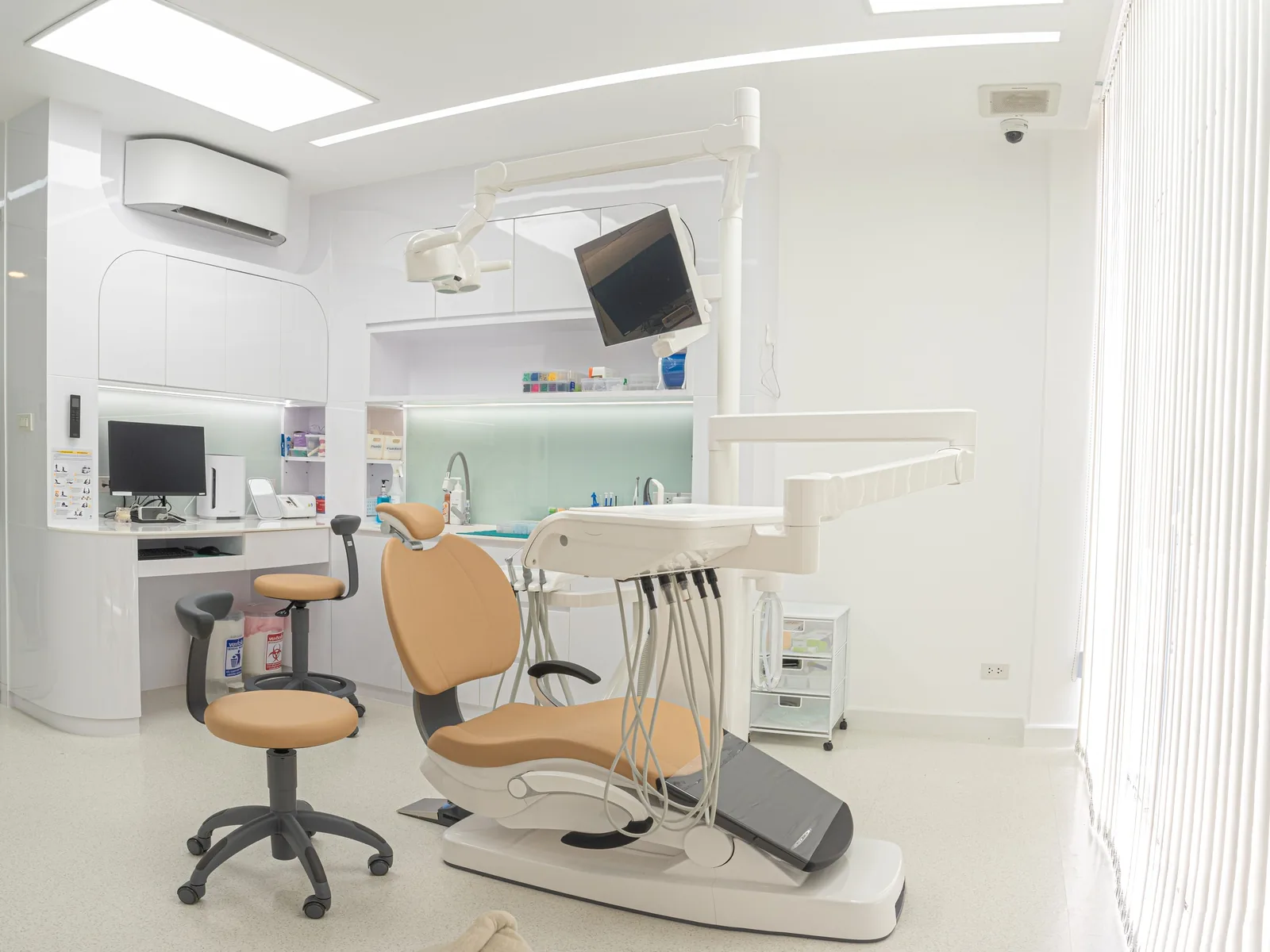
Many people have questions about the day the braces come off: what happens, does it hurt, and how do you keep the teeth straight afterwards? Here is the visit as I do it at Tooth Boutique.
What happens on brace removal day
Taking the braces off is only part of the appointment. Several steps get the mouth ready for the retainer.
1. Checking the teeth and the result. I check how the teeth line up, how the bite meets, and whether treatment has reached the goals in the plan. Where appropriate I take photographs or an X-ray.
2. Taking the braces and wires off. I use instruments made for the job to remove the brackets and archwire, tooth by tooth.
3. Removing the adhesive. Some adhesive stays on the enamel. I take it off gradually and carefully with an instrument designed for the job.
4. Polishing and cleaning. I polish the tooth surfaces so the teeth look clean and feel smooth again. If there is tartar, I may recommend a further cleaning visit.
5. A digital scan for your retainer. At Tooth Boutique we use a digital intraoral 3D scanner instead of impression trays, so there is no mouthful of setting putty. A three-dimensional model builds on the screen as I pass a small wand along your teeth. Retainer fees are quoted at your consultation.
6. Your retainer, fitted the same day. Because the scan is taken right after polishing, in most cases the retainer is fitted on the same visit.
Does it hurt, and how long does it take?
There is no injection and nothing is cut. The main sensations are pressure as the brackets come off and vibration while the adhesive is removed. Gums may feel slightly tender for a day or two. Everything is done in a single visit, about 1 hour at the clinic in total, less time than most people fear.
What your teeth feel like afterwards
- Smooth and strangely big. Your tongue and lips got used to brackets; it passes in a few days.
- Sensitive to cold. Freshly polished enamel can be sensitive, particularly to cold drinks. It usually settles over a few weeks.
- Slightly wobbly. This is normal. The bone and ligament around freshly moved roots are still firming up. With consistent retainer wear the teeth feel solid again.
White spots after braces
Some people notice chalky white marks on the teeth after the braces come off, especially around where the brackets sat. These are not caused by the removal. They form during treatment, where plaque collected around a bracket that the brush did not reach. Plaque produces acid, which draws minerals out of the enamel and leaves a white mark. These are called white spot lesions.
How to prevent them. From the day the braces go on, brush thoroughly, especially around the brackets and between the teeth, and use fluoride products as I advise. Do not wait until the braces are off; prevention during treatment does a great deal to lower the chance of white spots.
Early, faint spots may fade with careful oral hygiene and regular fluoride. If a spot is turning whiter, the surface is starting to pit, or it bothers you, come in and let me look and advise on care or treatment.
Why the retainer goes in immediately
Teeth can move from the position we straightened them into, especially just after the braces come off, and how much varies from person to person. Changes in the tissues around the teeth, the forces of biting and everyday use, and growth or age all play a part. So wear your retainer as I advise. Retainer types, cleaning and how long you keep wearing one are covered in my article on retainers after braces.
The first few weeks: what to do
1. Wear the retainer as instructed. Take it out only to eat and to clean your teeth, then put it straight back in.
2. Brush and floss properly. Cleaning is much easier now. Brush thoroughly and floss every day.
3. Clean the retainer every day. Rinse it in cool water and brush it gently with a soft brush. Avoid hot water, which can warp the plastic.
4. Take care of sensitivity. Use a toothpaste for sensitive teeth and go easy on very cold food and drinks. If it is not improving, tell the clinic.
5. Book a polish and fluoride visit as advised. A polish clears build-up, and fluoride helps strengthen the enamel.
6. If the retainer has a problem, do not wait for your next appointment. If it feels loose, cracks, breaks or gets lost, contact the clinic straight away. Teeth can move quickly in this period, and the old retainer may no longer fit.
7. Keep your follow-up appointments. I check that the teeth are holding their position and the retainer still fits.
Easy to remember: wear the retainer consistently, keep everything clean, watch for anything unusual, and come to your follow-ups.
Cases that combine braces with jaw surgery
The removal in my reel was a surgical case. The lower teeth sat in front of the upper teeth because the jaws were out of balance. Braces cannot reposition a jaw, so cases like this combine orthodontics with jaw surgery. The surgery is done by an oral and maxillofacial surgeon at a hospital; I do the orthodontics before and after. If you suspect your case is one of these, come and ask.
Book a consultation
Not started yet? If you are wondering whether metal braces or Invisalign would suit you, I am happy to examine you and explain the options plainly. Message me on LINE or call 098 831 0246. The clinic is at Venice Di Iris, Vacharapol Road, Bang Khen, Bangkok, open daily 10:00 to 20:00, closed Tuesdays. Parking is available.