

Many people picture braces as a simple job: glue the brackets on, thread a wire through, and wait. From where I sit, the day that decides how a case will end is not the day the braces come off. It is the first day, when each bracket is bonded to each tooth.
What a bracket actually does
A bracket is a small piece of metal or ceramic bonded to the front of a tooth, with a slot through the middle for the archwire. The bracket itself does not move anything. Orthodontic wire remembers its shape. When I thread it through a row of brackets that are not yet in line, the wire tries to return to its smooth curve, pulling every bracket toward that curve, and the teeth come with them.
Put simply, the bracket is a handle I attach to the tooth and the wire is the force pulling on that handle. Where the tooth ends up depends on where the handle was attached.
What "position" means on a single tooth
I bond each bracket directly onto the tooth at the chair. When I bond one bracket, I am making three decisions at once, and each has a tolerance of fractions of a millimeter or a few degrees.
- Height. How close to the biting edge or the gum the bracket sits. If neighboring brackets are at different heights, the wire lifts one tooth and lowers the next, and the edges no longer line up.
- Side to side. The bracket should be centered on the tooth. Placed off-center, it rotates the tooth.
- Angle. The bracket must run parallel to the long axis of the tooth. Tilt it, and the root tilts with it. You cannot see that from the outside, but it affects how stable the tooth is once treatment ends.
The prescription built into every bracket
Brackets are not identical from tooth to tooth. The slot is cut at a slightly different angle and tilt for each tooth, matching where that tooth should sit at the end of treatment. In orthodontics we call these built-in values the bracket's prescription. Once a straight wire runs through every bracket, it carries each tooth toward a position designed in advance.
There is one condition. The bracket has to be on the right tooth, in the right place. A correct prescription bonded in the wrong spot still sends the tooth to the wrong place. The prescription is a helper, not a substitute for planning.
What specialist training adds
I want to say this with respect for fellow dentists. Every dentist studies the basics of orthodontics at dental school, and bonding a bracket securely to a tooth is something a general dentist does well.
What specialist training adds is the habit of seeing the whole case to its end before the first bracket goes on. A specialist orthodontist is trained to read the facial profile, the relationship between the upper and lower jaws, the bite and the root positions, and then to design where every tooth needs to go, with how much force, and in what order. The bracket position on each tooth is adjusted to that patient's plan, not simply taken from a textbook.
My own training
I qualified in dentistry at Chulalongkorn University, then completed the Doctor of Clinical Dentistry in Orthodontics at The University of Sydney, a three-year, full-time specialist program spent planning and treating orthodontic cases under supervision. That is why I still spend more time on the planning stage than many patients expect. There is more on my doctor page.
What happens when a bracket is off
A tooth does not know the plan. It only knows where its bracket is and which way the wire is pulling. If the bracket is in the wrong position, the tooth moves faithfully to the wrong place. It takes time before that shows. Then the bracket comes off, goes back on in the right spot, and the tooth travels back. Every correction like that adds to treatment time.
Moving a bracket during treatment does not always mean something went wrong. Sometimes I reposition one deliberately in the finishing stage, as planned from the beginning. Do ask whether a repositioning is finishing work or a correction.
Questions to ask before you start braces
- Who is planning my case, and have they completed specialist orthodontic training?
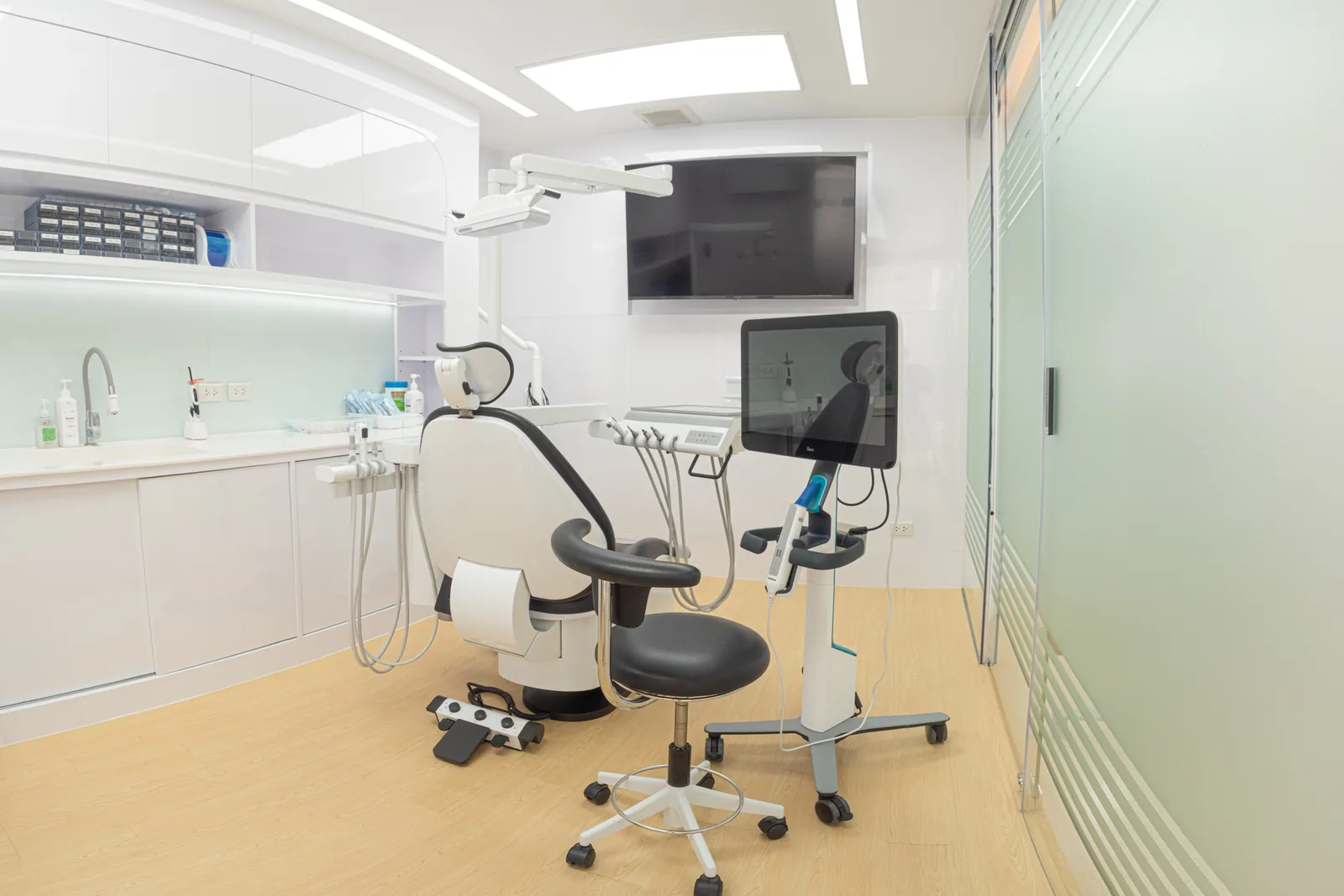
- What records will be taken first? At my clinic I use a digital intraoral 3D scanner instead of impressions, digital X-rays, and a dental CT scan where the case needs it.
- What is the plan? Will any teeth be extracted, and roughly how long will it take?
- Which retainer will I wear afterwards, and for how long?
A dentist who has planned the case properly can answer all of these straight away.
What braces cost at the clinic
Metal braces start from 49,000 baht, with installments from 1,500 baht a month. Invisalign starts from 69,000 baht, with an assessment fee of 999 baht. These are starting prices, and I confirm the exact fee after your examination.
Book a consultation
If you would like me to look at your case and walk you through the plan before you decide:
📲 Booking is easy
Message us on LINE or call 098 831 0246
🕙 Open daily 10:00–20:00 (closed Tuesdays)
The clinic is at Venice Di Iris, Vacharapol Road, Bang Khen, Bangkok